
The Clark County Released Last 72 Hours
The official sweep found no Clark County Sheriff page that lists releases over a rolling 72-hour window. No public feed cadence, retention span, field inventory, or booking-photo column is documented. The sheriff page instead refers to people recently processed into jail. That language concerns admissions, not departures.
A three-day inquiry gives a fixed interval for a records request and can catch an event outside a same-day check. It does not make missing data conclusive. A person may leave Clark County Jail for the community, IDOC, another county, or federal custody.
How to Check Who Was Released in the Last 72 Hours
Start with the event source most likely to be current, then seek the durable record. Exact dates matter because “last three days” shifts while an office processes a request.
- Set a local start and end covering the full 72 hours.
- Use the Illinois VINE search for a known person and read the reporting agency.
- Call Clark County Jail at 217-826-6393 for the release-record custodian.
- Request a release log or segregable entries for the bounded interval.
- Check Clark County cases on Judici for the legal order.
- Use IDOC if a transfer or state sentence makes the state record relevant.
The Clark County same-day release route is more focused when the event is believed to be recent.
What the Released Last 72 Hours Shows
Clark County does not publish a web table of release fields. A request should name the facts needed and seek definitions for agency codes.
| Field | Purpose |
|---|---|
| Name and booking number | Separate people and episodes |
| Admission date | Anchor the custody period |
| Release date and time | Test the 72-hour boundary |
| Release type | Identify the recorded outcome |
| Bond information | Connect bond to its terms |
| Destination | Separate release from transfer |
| Case number | Locate the court disposition |
A booking photo identifies a booking record but does not prove release. Ask for the release entry itself.
Weekend and Holiday Releases
Weekends and holidays can affect access to the clerk or records office, but no Clark source states a special weekend release schedule. Do not invent an exit hour or assume that a closure stops custody changes. Illinois VINE is described as available around the clock, while FOIA and clerk work are not instant.
A notice may arrive after the event because VINE depends on agency data. Court entries may explain the order without stating the physical exit time. Preserve the event label, agency, and time, then compare them with the sheriff record.
For one named person, use the Clark County released-inmate lookup to follow county, IDOC, federal, and court paths.
If There Is No Released Last 72 Hours Online
Ask the Sheriff's Office under Illinois FOIA for an existing release log covering the exact 72-hour span. If that report is not kept, request reasonably segregable entries from maintained booking and release records. Illinois FOIA requires no magic wording. Seek the release time, category, destination, booking number, and case number.
Ordinary noncommercial requests generally receive compliance or denial within five business days after receipt under 5 ILCS 140/3, subject to a lawful extension. This is not a promise of instant or unredacted production.
The Clark County Circuit Clerk supplies a second durable route. A docket or copy can show bond, judgment, sentence, probation, or satisfaction, though it may omit the jail's door-exit time.
Clark Release Data Can Disappear
A current custody result describes present status, not a three-day history. Once a person leaves one custodian, an entry may change or disappear. That absence cannot reveal whether the person posted bond, finished a sentence, transferred, or fell outside a live feed.
VINE is agency-fed. Name variation, identity mismatch, transfer, delay, an offline feed, or data aging can affect results. Never infer a release time from when a result was last seen.
Note: Clark County publishes no feed-retention period, so the sheriff or court record is the safer historical source.
Clark Court Records Explain Releases
The manifest image comes from the Clark County Circuit Clerk, custodian of the related local court file.
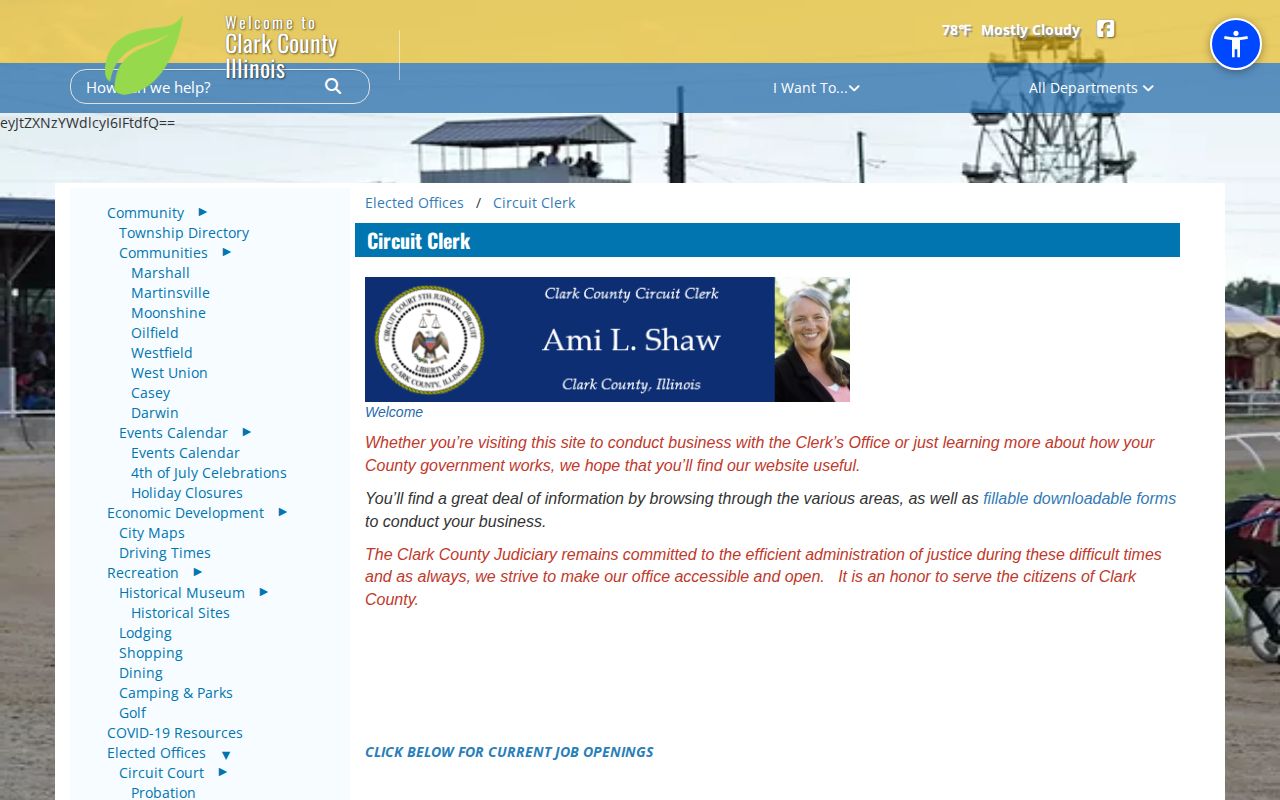
The clerk route is not a release feed. It helps explain the legal event after a live custody entry changes. Match the person and case number first.
A police incident report is also not a substitute. It documents an occurrence, not a jail departure. Another county's roster cannot establish a Clark County release.
Three-Day Clark Custody Comparison
A three-day inquiry may cross systems. Clark County Jail holds the local booking record. IDOC controls state admission, parole, mandatory supervised release, and discharge data. BOP controls federal records, while ICE uses a separate locator. Leaving Clark custody can lead to one of those systems without a community return.
Start with the sheriff destination, then use the receiver's locator. IDOC state fields must not be relabeled as a Clark 72-hour list. Likewise, “Not in BOP custody” does not establish a local jail event.
A court mittimus or transfer order may identify the authority. Mittimus means the court document directing custody or commitment.
Illinois VINE Across 72 Hours
VINE can reconstruct a known person's status. Compare identity details and preserve the event wording. Registration is for future notices by offered channels, not a guaranteed archive.
The matching manifest capture of the Illinois VINE landing page shows the statewide entry.

The state entry supports person search and notice. It does not publish a Clark-only roster. Follow any transfer to the receiver and confirm any release with the sheriff record.
Preserve a Clark Release Timeline
Record the booking episode, last custodian, court order date, agency event, physical release time when supplied, release type, and destination. Cite which office supplied each fact. This prevents a filing time from being confused with exit time.
Use local time consistently and state whether boundaries are inclusive. Social posts, incident reports, and registries can offer leads but none has complete release coverage. The sound sequence remains VINE, sheriff records, and court context.
Resolve Conflicting Clark Release Dates
Several dates can appear within one inquiry. Booking marks admission. A court date marks legal action. The sheriff release time marks the recorded end of Clark jail custody. A VINE timestamp describes its agency-fed event. IDOC admission can follow transfer. These are different points, not one release date.
For physical departure, request the sheriff time. For the legal reason, use the disposition. For entry into state custody, read IDOC. For notification history, preserve VINE wording and agency. All can be accurate while recording separate steps.
If sources conflict, compare identifiers and booking episodes. An older case or same name can create a false mismatch. Ask each office to explain its own field rather than assuming the newest page controls an older event.
Write the 72-hour range in America/Chicago time. State dates, times, and whether the final boundary is included. This prevents an accidental four-day request.
Retain the response date too. A later-produced record remains evidence about the earlier interval, while VINE serves current notification. Event time and retrieval time should stay separate.
Public Record Search
Sponsored Results