
Clark County MSR Date Meaning
Mandatory supervised release follows many modern determinate prison terms. It remains part of the sentence even though a person has left prison confinement. Under 730 ILCS 5/5-8-1(d), the term depends on the offense and sentence framework. Projected Discharge Date may therefore be later than physical release.
The official MSR statute provides the governing terms.
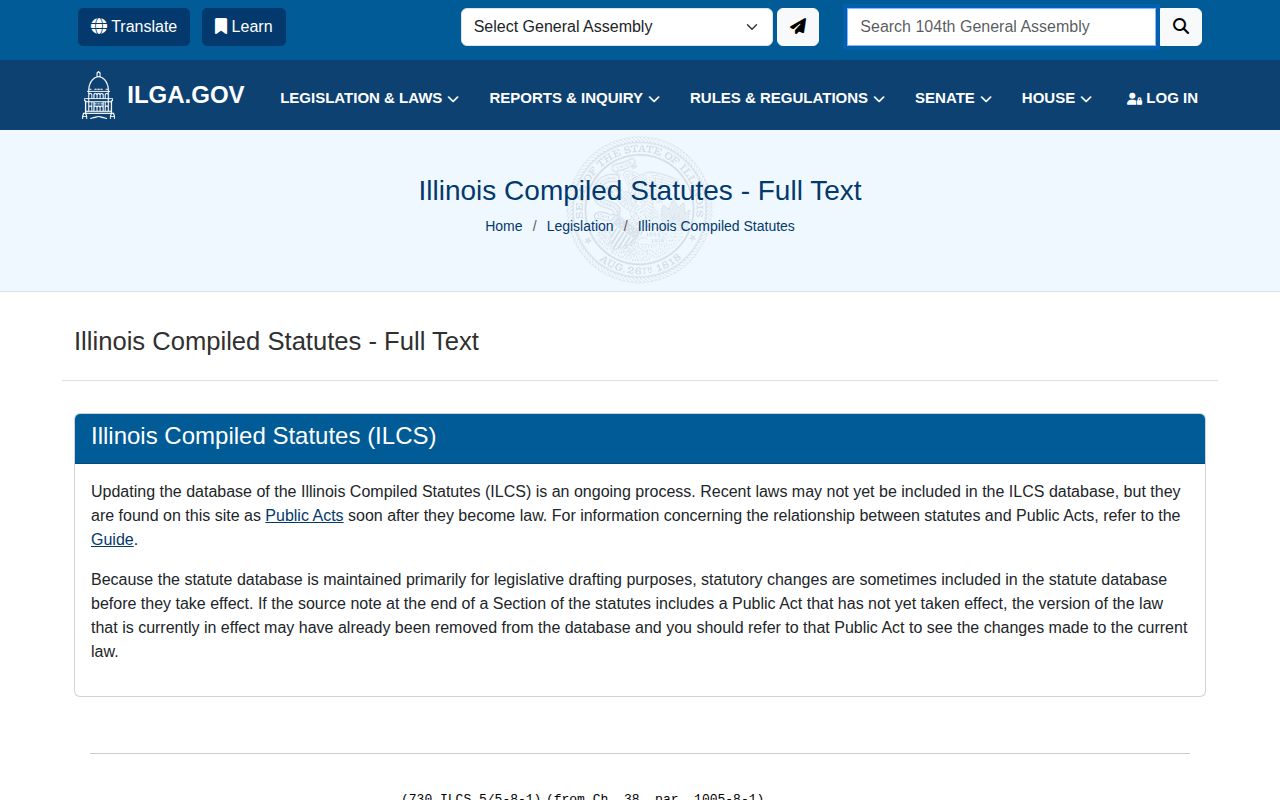
The statute helps interpret IDOC fields, but the agency's current calculation and status remain essential for a named person. Do not call Projected Discharge Date the jail release date. It can mark the expected end of supervision. Last Paroled Date, Offender Status, and Location are better public fields for deciding whether the prison transition occurred.
Clark County Court Date Evidence
The Clark County Circuit Clerk can supply the bond order, judgment, mittimus, sentencing order, and later amendments. These records explain the legal basis for custody. They may show presentence credit and whether terms run at the same time or one after another.
A court order may authorize release, but it does not always capture the exact time the jail completed processing. Pair it with the sheriff's release event. The jail event can show that a person left, while the court file explains whether the reason was bond, sentence completion, dismissal, or transfer.
If no case number is known, use the clerk's record-search route with a name and bounded years. A certified order is more durable than a public search screen, especially when later sealing affects online access.
Clark County Release Date Systems
Start with the last actual custodian. Clark County Jail holds local detainees and some people serving local terms. IDOC holds people committed to state prison. A federal or immigration transfer moves the question to BOP, USMS, or ICE. One system's projected field cannot be applied to another.
A pretrial detainee usually has no sentence-credit projection. The next event may depend on a bond or pretrial-release order, dismissal, plea, judgment, or transfer. For a county sentence, obtain the judgment and custody-credit terms, then ask the sheriff to confirm its computation. Clark County publishes no local jail good-time policy, so no outside calculator can fill that gap.
| Situation | Controlling source | Date evidence |
|---|---|---|
| Pretrial Clark detention | Court and sheriff | Release order plus jail event |
| County jail sentence | Judgment and sheriff computation | Written jail confirmation |
| IDOC sentence | IDOC and Illinois statutes | Projected Parole Date, Last Paroled Date, Projected Discharge Date |
| Federal or immigration custody | Federal custodian | BOP, ICE, USMS, or court record |
Find a Clark County Release Date
Use a record-based workflow. Do not infer a date from disappearance from a roster or VINE. A transfer removes someone from one agency while custody continues elsewhere.
- Identify whether Clark County Jail, IDOC, or another authority now holds the person.
- For Clark custody, obtain the bond, release, judgment, or sentencing order from the Circuit Clerk.
- Call the jail at 217-826-6393 and request the booking or release event in writing when exact proof matters.
- For IDOC custody, open the official offender search and match the IDOC number, case, birth details, and physical record.
- Record each field exactly. Compare Projected Parole Date, Last Paroled Date, Projected Discharge Date, Offender Status, and Location.
- Review the sentence block and the version of the credit statute that applies to the offense and sentence.
- Ask IDOC for written verification if the date is material or has changed.
VINE is useful for agency-fed custody changes, but it is not a sentence calculator. The VINELink Release Check explains how to register for an alert while preserving the official-record confirmation step.
Clark County IDOC Date Fields
Illinois does not publish one universal field named tentative release date. The IDOC detail uses an Admission/Release/Discharge section. Projected Parole Date generally estimates the transition from confinement to parole or MSR. Last Paroled Date records a past release-related event. Projected Discharge Date estimates when the whole sentence and supervision will end.
That difference is vital. A person may be out of prison, shown with a Last Paroled Date and parole-related status, yet remain under supervision until a later projected discharge. Conversely, a future Projected Parole Date does not prove the person will leave on that date. Life or indeterminate cases may show ineligible or to be determined.
IDOC also shows sentence data, including the mittimus or case, offense, county, custody date, sentence, and whether a sentence is discharged. A mittimus is the court order committing a person to custody. Reconcile all sentence blocks because concurrent and consecutive terms affect the result.
Clark County Sentence Credit Rules
Illinois sentence credit is offense and date specific. Under 730 ILCS 5/3-6-3, eligible sentences outside listed exceptions generally receive one day of sentence credit for each day imprisoned. This is often shortened to day-for-day credit, but the phrase cannot determine an individual's date without the sentence, offense date, presentence custody, disciplinary record, and all governing terms.
Serious-offense provisions impose stricter floors. Some murder categories effectively require full service. Many listed violent offenses permit no more than 4.5 days of credit per month, which produces the familiar roughly 85 percent minimum. Specified drug offenses can use a 75 percent structure. Natural-life terms receive no sentence credit under the cited subsection.
View the official sentence-credit statute behind those distinctions.
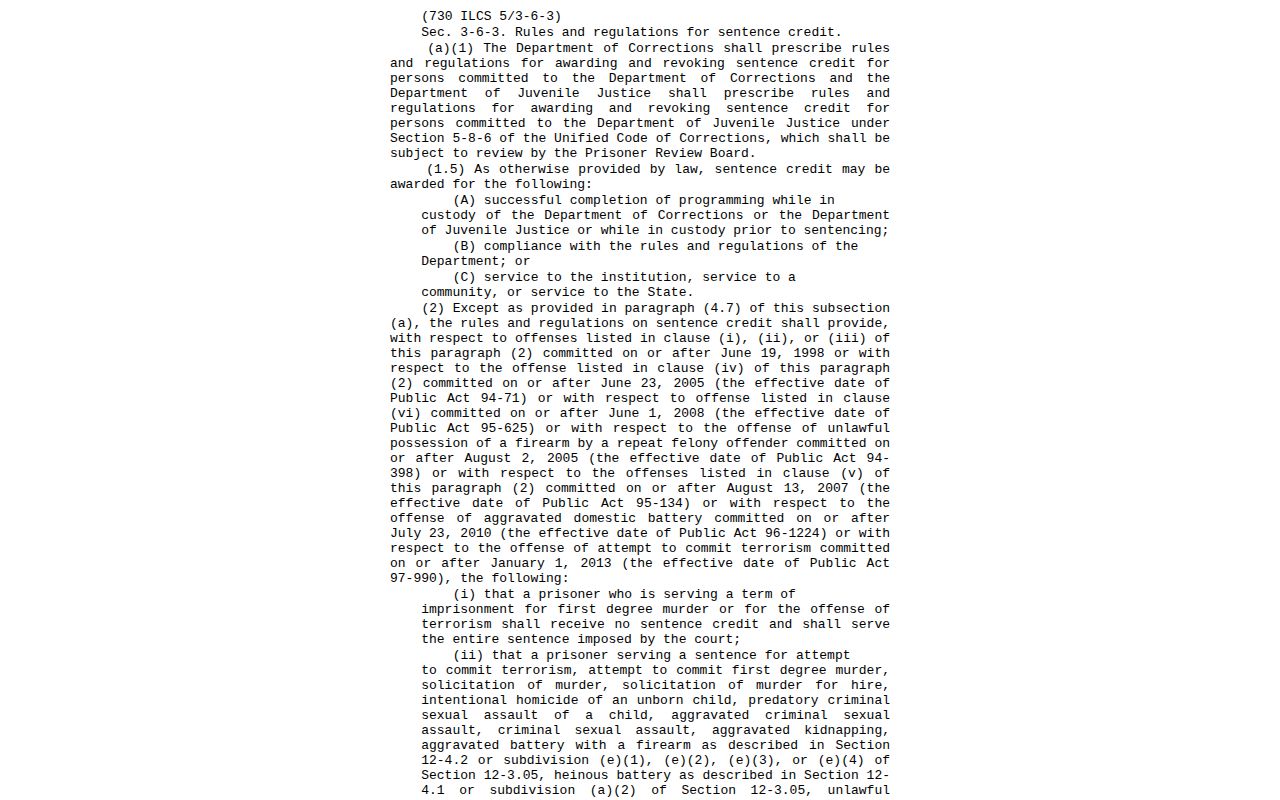
The statutory text shows why a broad claim that every Illinois prisoner serves the same share would be wrong.
Clark County Earned Credit Limits
Illinois law also authorizes categories of earned or program credit, subject to eligibility, exclusions, awards, and IDOC administration. These are not automatic amounts that can be entered into an unofficial calculator. The person's record and governing statute must support the award.
Section 3-6-3 prevents specified added credits from cutting below certain service floors. An 85-percent sentence cannot fall below that floor. A covered 75-percent offense generally cannot fall below the separate statutory minimum through specified credits, while gunrunning retains its stated limit. A full-service offense cannot drop below full service.
IDOC must give relevant State's Attorney offices advance notice before an earlier release caused by specified earned credit. That rule does not guarantee that a public web projection has already updated. It also does not replace release-notification registration.
What Changes Clark County Dates
A projected date can move for lawful reasons. The change itself does not show that the first date was false. It may reflect new information or a later event.
| Change | Possible effect | Where to verify |
|---|---|---|
| Custody-credit correction | Earlier or later projection | Court order and IDOC calculation |
| Earned credit award or loss | Changes confinement calculation within statutory floors | IDOC record |
| Amended judgment or resentencing | Changes sentence basis | Clark court file |
| Consecutive or concurrent ruling | Changes combined term | Judgment and sentence blocks |
| Warrant or detainer | Can prevent community release | Holding and receiving agencies |
| Parole or MSR revocation | Returns case for recalculation | PRB result and IDOC |
| Release-plan administration | Can affect actual transition | IDOC and supervision office |
A detainer is a request or hold from another authority. Leaving IDOC under a detainer may mean transfer, not freedom in the community. The destination must be confirmed.
Clark County Parole Eligibility Dates
Older indeterminate cases and certain modern exceptions require separate parole analysis. Under 730 ILCS 5/3-3-3, older sentences use statutory minimum computations. People sentenced under the determinate framework generally serve the term less lawful credits and then enter MSR rather than old-style discretionary parole.
The statute source below explains that parole eligibility and an actual release date are different.
A hearing date or eligibility date does not establish a grant, approved plan, or physical exit.
Youthful parole under 730 ILCS 5/5-4.5-115 is a defined exception with age, offense, conviction, and sentence conditions.
The eligibility statute must be applied to the specific case; it does not supply a universal number for all young people in IDOC.
Confirm Clark County Release Projections
For a Clark County detainee, pair the judgment or bond order with the sheriff's physical release event. The clerk can explain the legal basis, but may not hold the door-exit time. The sheriff can document the custody event, but the court order explains why it occurred.
For an IDOC person, save the exact labels and date of the public result. Verify Last Paroled Date and current status, examine every sentence block, then request written confirmation. IDOC's public verification number is 217-558-2200. Written requests go to the Public Information Office, 1301 Concordia Court, P.O. Box 19277, Springfield, IL 62794-9277.
A no-result is inconclusive because final discharge may remove the public record. A court order, agency release event, and current status together provide a sounder answer than any unsourced date calculator.
Public Record Search
Sponsored Results